
Indonesian Natural Herbs & Leaves
General Overview
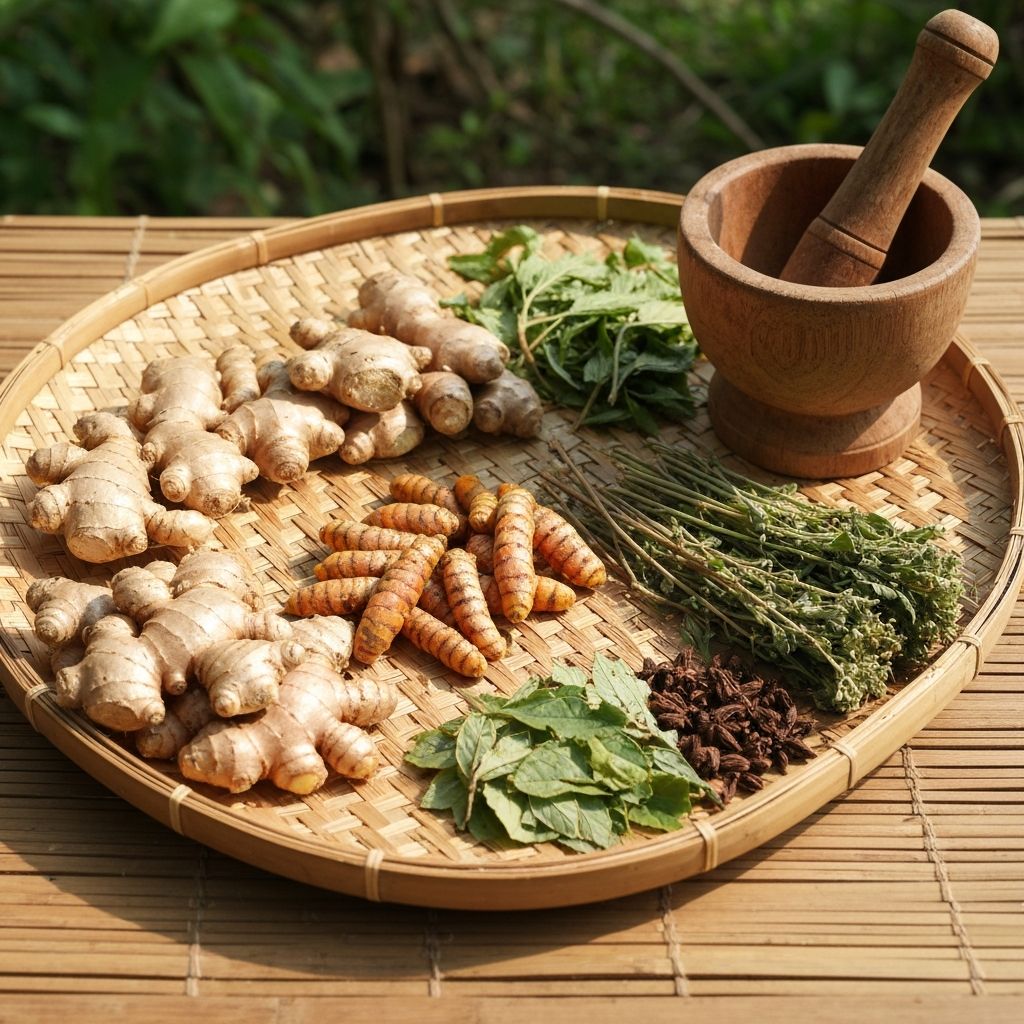
Indonesian traditional cuisine incorporates many natural herbs and leaves as regular dietary additions. These plants have been used in local eating patterns for generations, contributing to everyday meals through their aromatic and flavor properties, and their presence as plant compounds with traditional significance.
Common Indonesian Herbs & Leaves
Traditional uses and known compounds:
Jahe Merah (Red Ginger)
Used in traditional Indonesian cooking for its aromatic warmth. Contains compounds like gingerol and shogaol. Traditionally used in beverages and cooking for its flavor and warming properties.
Kunyit Hitam (Black Turmeric)
A traditional plant with deep roots in Indonesian herbalism. Contains diverse compounds including volatile oils and phenolics. Used in traditional preparations and local culinary practices.
Sambung Nyawa (Orthosiphon aristatus)
A traditional plant known in Indonesian traditional medicine. Contains compounds like orthosiphol and sinensetin. Used in traditional leaf preparations as part of local practices.
Other Notable Plants
- Lemongrass — aromatic herb used in cooking and traditional beverages
- Galangal — rhizome used for flavor and traditional properties
- Holy Basil — leaf used in Indonesian cuisine with traditional significance
- Pandan Leaves — fragrant leaves used in cooking and traditional practices
Traditional Context and Modern Understanding
These herbs and leaves represent part of Indonesia's rich culinary and traditional heritage. They have been incorporated into everyday eating and traditional practices for centuries. Modern scientific research has documented various compounds present in these plants, contributing to the understanding of their traditional uses.
The presence of compounds does not equate to specific outcomes or effects. These plants are simply elements of traditional eating patterns and cultural practices. Their roles in actual human health and physiology remain topics of ongoing research.
Use in Everyday Eating
In Indonesian cuisine, these herbs and leaves are typically used:
- As flavoring agents in traditional dishes and soups
- In warm beverages and herbal drinks
- As aromatics in rice dishes and curries
- In traditional preparations following local practices
- As part of cultural and culinary traditions
Important Context
This page provides purely educational, historical, and cultural information about Indonesian herbs. It is not medical advice, health claims, or nutritional guidance. Traditional use does not imply specific health effects. Individual circumstances vary. Consult professional resources for personal health decisions and before using any herbs for specific purposes.